Cultural Integrity vs The Room That Needs To Be Entertained
When push comes to shove, what wins. Cultural integrity or the profit motive. Roman Berry on devising, Western acting technique, the fear of unfamiliar ground and finding his own way of sharing Theatre For All.
Roman Berry
7/17/20263 min read
Cultural Integrity vs The Room That Needs To Be Entertained
Here's the question I keep coming back to. When push comes to shove what wins. Cultural integrity or the profit motive.
It's not a new question. Every time a story crosses a cultural border into a bigger market someone has to decide what stays and what gets cut. What gets translated and what gets protected. Who the story is really for.
Think about what happens when a Pacific Island story gets picked up by a global studio. Consultants are brought in. Knowledge holders are consulted. And still, somewhere in the edit, something comes out of left field. A detail that belongs to no culture anyone can point to. A gap where the real knowledge was withheld because the holders didn't feel the makers were worthy of it yet.
I understand that instinct completely.
Because I'm living the same question right now. Inside an ensemble piece and a solo work I've been quietly brewing. No global budget. No distribution deal. Just a room, bodies, languages and an audience that may or may not have been here before.
The ensemble piece takes a canonical Western text and runs it through women from the Philippines, India, Malaysia, Chile, Vietnam and Iran using a devising methodology rooted in Filipino folk dance. The text isn't the original. The bodies aren't Western. The metaphors aren't European. And I keep asking myself how much do I protect the soul of what we're making versus making sure the person in row C who has never encountered this practice before doesn't feel completely lost.
The solo work is the same question from the inside. My life. My body. My language. Cebuano expressions I'm not going to translate because translation flattens. But I also know that some people in that audience will be sitting with the unfamiliar and I have to decide whether the unfamiliar is the point or the barrier.
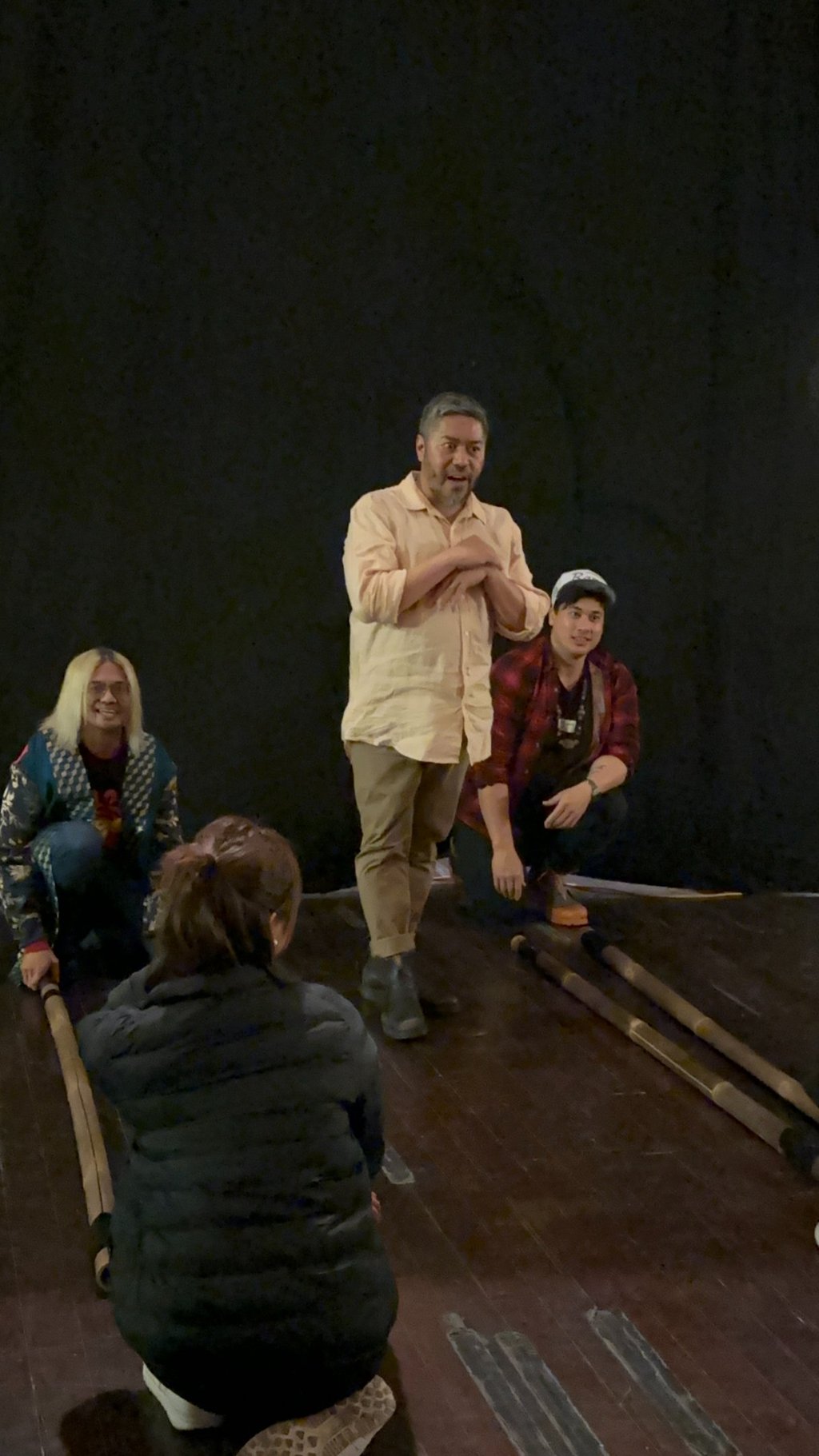
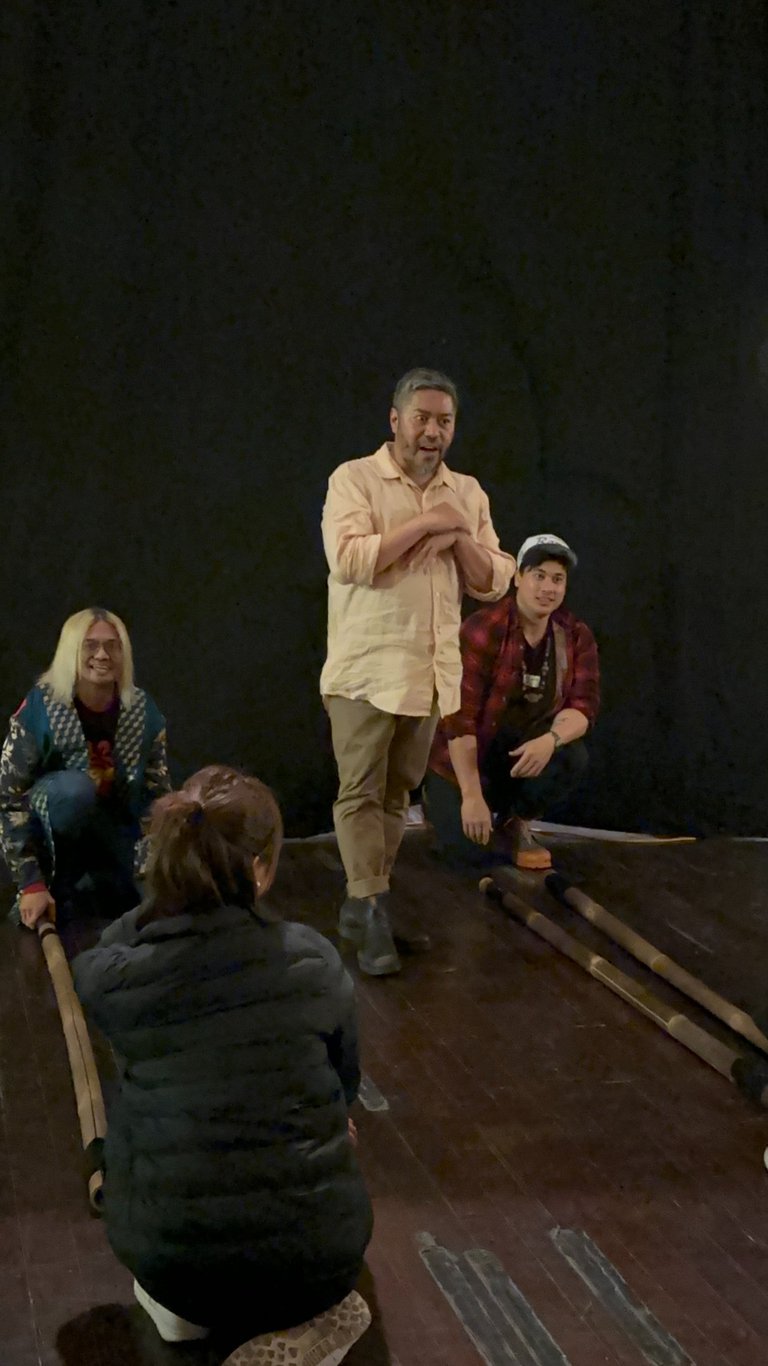
This methodology didn't arrive fully formed. It found its shape during my Adhocracy residency with Vitalstatistix in 2023. That room is where I stopped apologising for the way I work and started naming it properly. The tinikling poles on the floor. The bodies before the text. The fragment before the narrative. Not Very Berry was the project. But what came out of it was something I'm still building from.
And here's my honest confession.
I spent years resisting Western acting technique. Stanislavski. Meisner. The whole emotional recall architecture built for a very specific kind of interiority that isn't mine and isn't my ensemble's. I was almost proud of that resistance. Like it was proof of something.
But here's the truth. I still use it. When I'm coaching a monologue or working a song through with a performer, Stanislavski quietly walks back into the room. I'm not proud or humble about it. It's just honest.
What I've actually done is absorbed it, understood when it serves and learned to reach for it selectively when it does. That's not a contradiction. That's just what practice looks like over time.
The devisors I work with now often come in trained in exactly these frameworks. And when they walk into a devising room for the first time without a script, without a character breakdown, without an emotional recall exercise to anchor them the ground disappears. Everything they trained for assumes a text, a character, a linear narrative. My methodology asks them to start from body, from object, from fragment. That's genuinely disorienting even for experienced performers. Fear is the right word actually. Not weakness. Just the honest response to unfamiliar ground.
And I honour that. Because I've been there too.
The tension isn't between classical technique and what I'm building. It's between the work that comes from the inside of a culture and the room that needs to receive it. You can protect every metaphor and lose the audience entirely. You can sand every edge and lose the soul of the piece.
I don't think the answer is choosing one over the other. I think the answer is knowing exactly which edges you're willing to sand and which ones you'll die on. And being honest about why.
I'm finding my own way of sharing theatre. Not against the tradition. Not limited by it either. Just finding what Theatre For All actually looks like when the room includes everyone. The trained and the untrained. The familiar and the unfamiliar. Row C and backstage.
For me the soul of the work stays. The knowledge holders decide what gets shared and what doesn't. And if the room doesn't understand it completely that's not a failure. Sometimes the unfamiliar is exactly where the work needs to live.
Padayon.
Ro
Photo: Vitalstatistix Adhocracy Residency, Not Very Berry, 2023