A Fiscal Year Closed. My Move, For What It's Worth.
The ARTS dilemma. I've sat on this for a while. Watching the headlines. Watching the closures. Watching the rallying cries. This is my move, for what it's worth.
Roman Berry
7/3/20265 min read
As 25/26 closed out, I keep coming back to one question. Not "will the arts survive." We always survive somehow. The question is what it's costing us to keep standing.
I've sat on this for a while. Watching the headlines. Watching the closures. Watching the rallying cries online. I'm not writing this to add noise. I'm writing it because staying quiet started to feel like its own kind of choice. Not the one I want to make.
The facts don't lie. Per capita arts spending is at its lowest on record. Most of the new federal money goes to infrastructure. Not to the people making the work. Small to medium companies are being kept alive by pilot programs and micro grants. Patchwork. Not policy.
This year we watched it play out in real time. Big commercial musicals leaving Australian stages early. Tours cancelled before they even started. The reasons given were freight costs, soft ticket sales, a tighter cost of living climate. All true. But there's more sitting underneath that. War overseas. Global economic strain. People choosing fewer nights out. Choosing carefully when they do. Quietly, streaming has made staying home easier than ever too. Why brave the parking, the babysitter, the ticket price, when the couch already has something good on. None of this is isolated to theatre. It's the whole ecosystem feeling the squeeze at once. The big stages are just where it shows up first and loudest.
So why isn't the audience showing up for this fight the way we need them to?
I think it's because the message keeps landing as a complaint. Not a story. "Fund us" doesn't move anyone who isn't already inside the sector. People connect to people, not to budgets. We talk in numbers and percentages when we should be talking about the teacher who never got to finish her play. The migrant kid who found his voice in a community hall. The actor who took an unpaid gig because it was the only stage that would have him. The family who'd love a Saturday night at the theatre, but the numbers don't work this month. Not after rent. The graduate who trained for years, who did the work properly, and still can't find a paid stage to stand on.
We've also made the case feel optional. Like the arts are a nice to have. Easy to cut before the things that "really" matter. But infrastructure isn't just roads and rail. It's the hall that smells like old carpet, where someone found their voice for the first time. Until that shifts in how we tell it, the public will keep nodding along and moving on.
Part of this, I think, comes down to nostalgia. The desire to bring those big blockbuster experiences here. The ones a lot of us grew up loving on Broadway or the West End. Replicated on our own stages, in our community halls, on our amateur stages too. That desire is real and it isn't wrong. But replicating that model in this economic and political climate, with these freight costs, this audience caution, this much pressure on household spending, isn't realistic right now. That's not discouragement. It's just where we are. I say that gently. I love those big shows as much as anyone.
So maybe the answer isn't trying to recreate what worked somewhere else, at another time, in another market. Maybe it's an honest look at who we are here. What stories are actually ours to tell. That's not a lesser ambition. It might be the more commercial one if we let ourselves redefine what commercial even means. Connection over scale. Relevance over replication. I don't have this fully worked out. I'm just turning it over. I'd love to hear how others see it.
That's where my own advocacy keeps landing too. Diversity and multiculturalism in this sector can't just mean a flag on a poster or a fortnight of programming once a year. Real representation means culturally specific stories get funded as art. Not as outreach. It means a Filipino Australian solo piece, a First Nations work, a multicultural ensemble, getting taken seriously on its own terms. Not as a tick box next to the "real" season. It's migrant stories. Regional stories. Queer stories. Disability led work. If the funding model keeps rewarding scale and prestige over reach and representation, we lose exactly the voices that make this country's stages worth watching in the first place.
Here's what I keep turning over, for whatever it's worth.
Tell the human story first. The funding numbers second. Always.
Stop competing for attention as separate companies and separate causes. One sustained, unified voice carries further than a hundred individual posts.
Bring audiences into the advocacy, not just the seats. Let them see what disappears if this keeps going.
Push for funding tied to community reach and longevity. Not just prestige.
And here's where I push back a little. A tax offset might help stabilise the commercial end. I'm not against that. But it can't reach a company running on goodwill and volunteer hours because there's nothing to offset against. It's not the whole answer. It never was.
There's a model worth looking at properly. Ireland tried a basic income for artists. Real cash. No company size required. No revenue to prove. Just the artist, paid directly. And the results weren't soft either. Less anxiety. More time spent actually making work. Far fewer artists leaving the profession within two years. Ireland liked it enough to make it permanent. It's not perfect. Not everyone who applies gets picked. But it solves the exact problem a tax cut creates. It goes to the person. Not the entity big enough to offset against. That's the kind of equity I'd rather borrow. Not another tax conversation that mostly helps whoever already has the most.
And here's what worries me closer to home. Fringe festivals run on exactly the ecosystem this is eroding. Melbourne Fringe included. Independent artists. Small companies. Low budgets. High risk. Putting new work in front of audiences who might never see it anywhere else. When the conditions underneath that ecosystem dry up, Fringe feels it first and worst. It's the proving ground for so much of what eventually grows into something bigger. Lose that and we lose where new voices even begin.
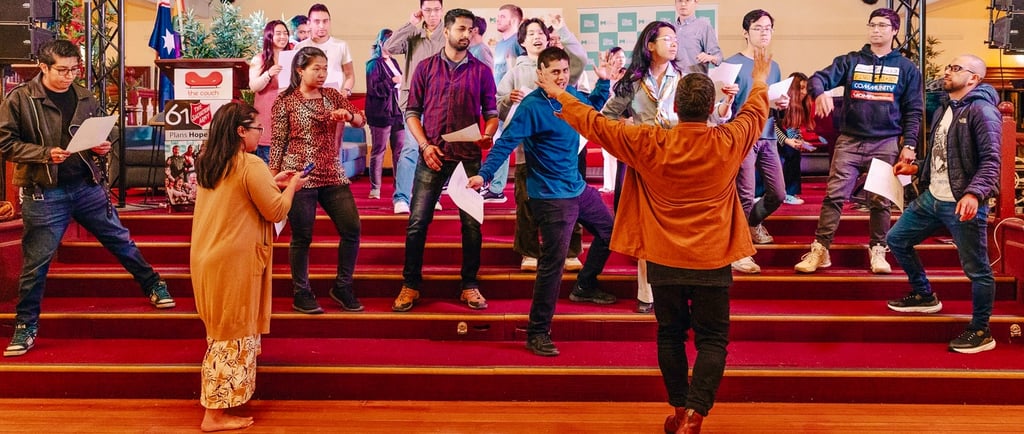
But here's where I sit, going into the second half of 2026. I'm still in the room. Still showing up. Still working. Still building. Closing out the year collaborating across three different productions, all aiming for an October season at Melbourne Fringe. I can't say much more yet but I am genuinely buzzing about what's coming. More to share as things firm up. Still running Tuesdays at The Couch every week. Still holding space with VODW, with Flying Fox, with whoever walks through the door wanting to tell their story. Theatre For All. Always. isn't just a tagline I post under. It's the thing I keep choosing, fiscal year after fiscal year, funding round or no funding round.
And I still hope. For a Creative Australia that funds the school hall workshop the same way it funds the gala stage. For a sector that tells its own story before someone else tells it for us. For amateur, community, independent and mainstage all finding their own version of sustainable, without one having to imitate the other. I don't know if any of that arrives this year, next year, or the one after. But hope isn't naive here. It's the same thing that gets me into the rehearsal room every week, whether the funding round goes my way or not. I'm not putting the work down while I wait for change. Showing up, again and again, is the only protest I know that actually means something.
This is my move. Not a manifesto. Not a fix. Just where I stand, out loud, while I keep doing the work.
Padayon.
Roman Berry
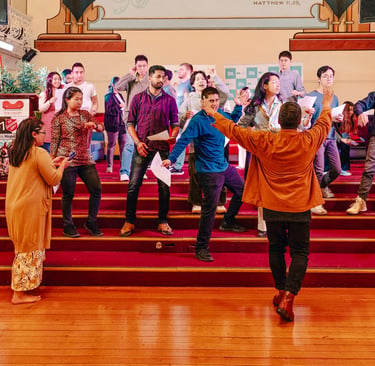
Image - Theatre Workshop at The Couch International Student Centre by Keshi Sacdalan